 ultimate-guide
Kitchen Remodeling Timeline for Loudoun County Homes
Table of Contents
- How Long Does a Kitchen Remodel Take in Loudoun County?
- The Kitchen Renovation Stages, Start to Finish
- What Drives the Kitchen Remodeling Timeline for Loudoun County Homes
- Kitchen Cabinet Lead Times and When to Order
- Building a Kitchen Remodel Project Schedule That Holds
- How to Speed Up Your Remodel Without Cutting Corners
- Frequently Asked Questions
Last Updated: October 19, 2026
How Long Does a Kitchen Remodel Take in Loudoun County?
A kitchen remodel in Loudoun County typically runs 8 to 16 weeks from demolition to final inspection, with most homes landing near the middle of that range. The kitchen remodeling timeline stretches longer when permits queue up, cabinets ship late, or a wall opens to reveal old plumbing. At Reo-ServicePro, we tell homeowners in Aldie, South Riding, and Haymarket the same thing on day one: the calendar is built by lead times, not by how fast a crew can swing a hammer.
A kitchen renovation is a sequenced construction project, not a single job. Framing cannot start before demolition clears, cabinets cannot be ordered against an unmeasured wall, and the final inspection waits on every trade before it.
Below, we break down each stage, what actually slows a project down in this county, and how to build a schedule that survives contact with reality.
The Kitchen Renovation Stages, Start to Finish
Every kitchen project moves through the same core phases, and each one has a realistic duration attached to it. Skipping or compressing a stage is how projects end up with crooked cabinets or failed inspections.

The kitchen renovation stages follow a fixed order:
- Design and measurement (1-3 weeks): Finalize layout, select finishes, and get exact field measurements.
- Permitting (1-4 weeks): Submit plans, respond to reviewer comments, receive the approved permit.
- Demolition (2-4 days): Tear out old cabinets, counters, flooring, and any wall sections.
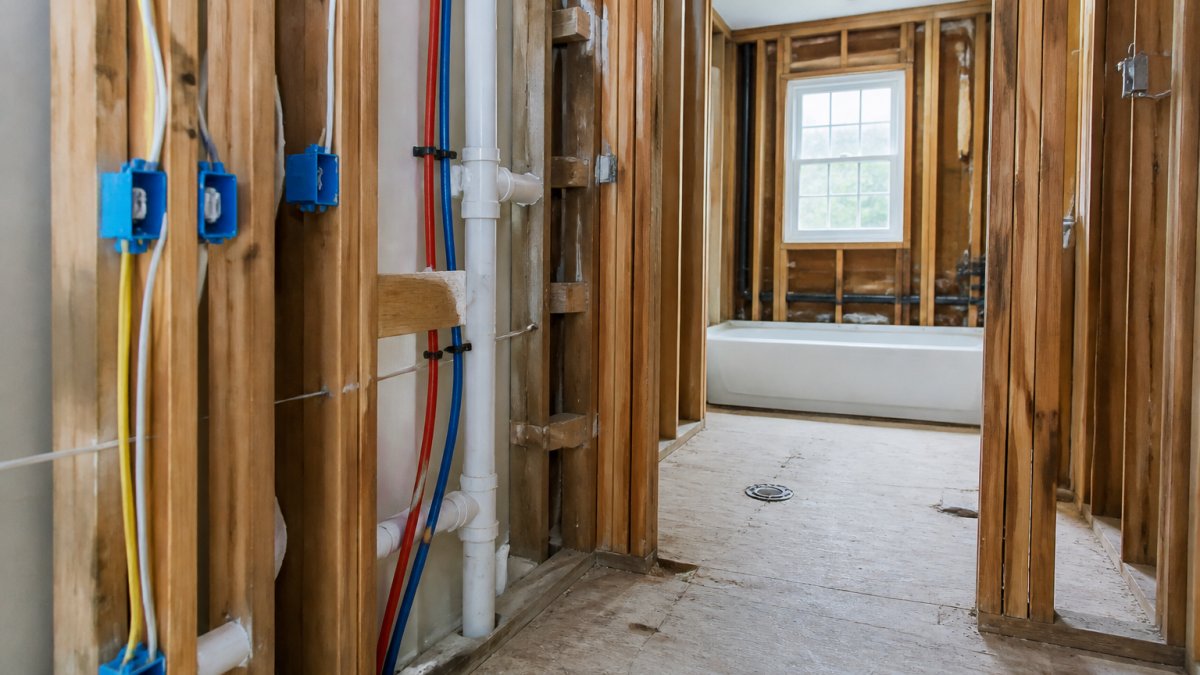
- Rough-in trades (1-2 weeks): Plumbing, electrical, and HVAC work behind the walls, followed by rough inspection.
- Insulation and drywall (1-2 weeks): Hang, tape, mud, sand, and prime.
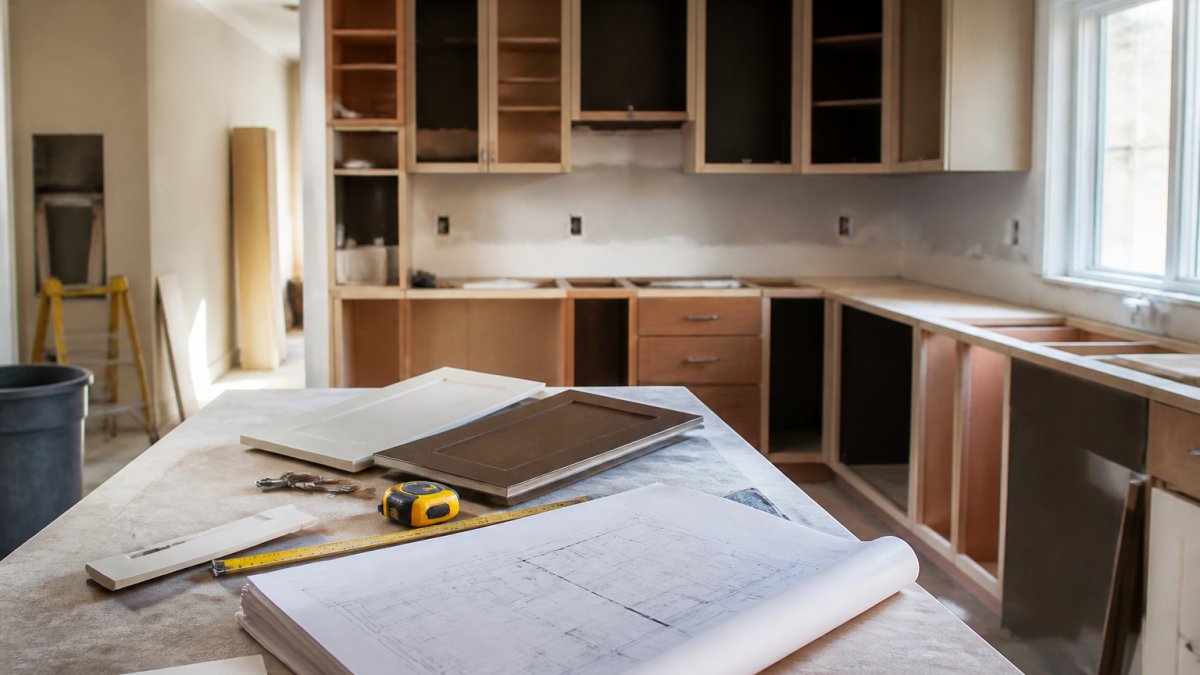
- Cabinet and counter install (1-2 weeks): Set boxes, hang doors, template and install countertops.
- Finishes (1-2 weeks): Tile, paint, fixtures, appliances, and trim.
- Final inspection and punch list (3-7 days): Close out permits and correct remaining items.
That sequence is the skeleton. What stretches it out is everything in the next section.
What Drives the Kitchen Remodeling Timeline for Loudoun County Homes
The kitchen remodeling timeline for Loudoun County homes is shaped by two forces more than any other: the local permitting pipeline and the availability of skilled trades. Both are outside a homeowner's direct control, which is exactly why they need to be planned around rather than discovered mid-project.
Permits and Inspections
Permits are the most common source of early delay. Most kitchen projects that move walls, add circuits, or relocate plumbing require a building permit, and electrical and plumbing work typically requires separate trade permits. Each permit carries its own review and its own inspection schedule.
Plan for two things: review time before work starts and inspection windows during it. Rough inspections must pass before drywall goes up, and a failed inspection means a correction and a re-inspection, which can add days. Homeowners should confirm current requirements and fees directly with the county's permit office rather than relying on a contractor's verbal estimate.
Contractor Availability and Hidden Conditions
Skilled trades in Northern Virginia book out weeks ahead during busy seasons. A plumber who can start in three days in February may be three weeks out in June. That scheduling gap is a real timeline variable, not a sales tactic.
Hidden conditions are the other wildcard. Opening a wall can reveal outdated wiring, corroded supply lines, or water damage that was never visible. A contractor who walks the job carefully before demolition can flag likely trouble spots; no one can promise zero surprises behind drywall.
Kitchen Cabinet Lead Times and When to Order
Cabinets are the single longest lead item in most kitchens, and ordering them at the wrong moment wrecks the schedule in both directions. Order too early and you risk ordering against measurements that change after demolition. Order too late and the whole project stalls waiting on boxes.
The practical rule: order cabinets immediately after field measurements are confirmed and the layout is locked, before demolition begins. Stock and semi-custom lines move faster than fully custom builds, but every category needs a buffer.
| Cabinet Type | Typical Lead Time | When to Order |
|---|---|---|
| Stock | 1-3 weeks | After final measurements |
| Semi-custom | 4-8 weeks | After design sign-off |
| Fully custom | 8-16 weeks | Before demolition starts |
Countertops add their own delay. Template measurement happens only after base cabinets are set and level, and fabrication follows. Stone counters commonly need a week or more after templating, so the schedule must leave room between cabinet install and counter install.
Building a Kitchen Remodel Project Schedule That Holds
A kitchen remodel project schedule works when it is built backward from fixed dates rather than forward from a start day. The cabinet ship date, the counter fabrication window, and the inspection availability are the anchors; everything else flexes around them.
Here is the sequence we use:
- Lock the design and field measurements.
- Place the cabinet order and record the ship date.
- Submit permits and track the review clock.
- Schedule demolition to land just before cabinet delivery, not months ahead of it.
- Book rough-in trades against the demolition date.
- Reserve inspection windows before drywall.
- Hold a buffer of one to two weeks for the unexpected.
That buffer is not padding. It is the difference between a schedule that absorbs a failed inspection and one that collapses on the first surprise.
How to Speed Up Your Remodel Without Cutting Corners
Speeding up a kitchen project comes down to decisions made before demolition, not pressure applied during it. Homeowners who finalize selections early and respond to questions quickly consistently finish ahead of those who choose tile in week six.
What actually compresses the calendar:
- Finalize every finish before demolition. Tile, paint, hardware, and fixtures chosen upfront prevent mid-project pauses.
- Approve change orders the same day. Every day a decision sits open is a day a trade waits.
- Choose in-stock or semi-custom cabinets if the timeline matters more than a fully custom look.
- Bundle trades under one contractor. Coordinating plumbing and electrical through a single point of contact removes the gaps between separate schedules.
- Be reachable. A quick answer on a fixture or a valve location keeps the crew moving.
What does not help: rushing inspections, skipping the rough-in inspection, or installing cabinets over unlevel floors. Those shortcuts cost more time in corrections than they ever save.
At Reo-ServicePro, owner Gary Golman brings 20 years of hands-on experience to every walkthrough, and because we handle plumbing, electrical, and remodeling under one roof, there is no gap between trades waiting on each other. We are licensed and insured, we keep job sites clean daily, and you talk directly to the person managing your project.
Frequently Asked Questions
How long does a kitchen remodel take from start to finish?
Most full kitchen remodels run 8 to 16 weeks of active construction once work begins. Add 4 to 8 weeks before that for design, selections, and permitting. The kitchen remodeling timeline for Loudoun County homes often lands at the longer end because permit review and contractor availability add time. A cosmetic refresh with new counters and paint can finish in 3 to 5 weeks, while a layout change with moved plumbing and electrical pushes past 16 weeks.
What are the stages of a kitchen renovation, in order?
The kitchen renovation stages follow a fixed order: design and selections, permitting, demolition, rough-in plumbing and electrical, inspections, drywall and paint, cabinet and countertop installation, appliance and fixture hookups, then the final inspection and walkthrough. Each stage depends on the one before it, which is why a delay in cabinet delivery or a failed rough-in inspection stalls everything downstream. Locking selections early keeps the stages moving.
Do permits affect a kitchen remodel timeline?
Yes, permits are one of the biggest variables. Any project that moves plumbing, adds electrical circuits, or changes walls needs permits and inspections. Review times vary by jurisdiction and season, and each inspection adds a scheduled visit before the next stage can start. Build permit review and inspection windows into your kitchen remodel project schedule from day one rather than treating them as an afterthought, and confirm who is pulling the permits before work starts.
When should I order cabinets and appliances?
Order cabinets as soon as the design is finalized and measurements are confirmed, before demolition begins. Cabinet lead times commonly run 6 to 12 weeks depending on the line and customization, and semi-custom or custom orders sit at the longer end. Appliances should be ordered at the same time so they arrive before installation week. Ordering late is the most common reason a kitchen sits finished except for the cabinets.
What can delay a kitchen renovation?
The usual culprits are late cabinet deliveries, backordered appliances, permit review backlogs, and hidden conditions found after demolition, such as old wiring, water damage, or out-of-code plumbing. Change orders during construction also stretch the schedule. A thorough pre-construction walkthrough and a fixed selection deadline reduce surprises. Ask your contractor upfront how hidden issues are handled and how change orders affect the schedule.
How can I use my kitchen during a remodel?
Plan for your kitchen to be unusable during demolition and rough-in, and only partly usable afterward. Set up a temporary kitchen elsewhere with a microwave, mini fridge, and coffee maker. Many homeowners schedule the project around work travel or set aside a food budget for takeout. Discuss the daily cleanup routine with your contractor so dust and debris stay contained and the rest of the house stays livable.
A kitchen remodel tests your patience as much as your budget, and the difference between a smooth project and a stressful one usually comes down to planning and communication. If you are ready to stop guessing at timelines and start with a real assessment, Reo-ServicePro offers a free estimate with an owner-led walkthrough of your kitchen's actual conditions. Get started with Reo-ServicePro and a schedule built around your home, not a generic template.