 how-to
How to Avoid Budget Overruns on Kitchen Remodels
Last Updated: November 2, 2026
Quick Summary
Avoiding budget overruns on kitchen remodels is a process problem, not a shopping problem: freeze your scope and layout early, size your contingency correctly, and control every change with a written change order once demolition starts. Build a line-item cost breakdown before signing and track spending weekly against it.
- About 40% of kitchen remodels go over budget, per a 2026 Kraftersland report cited in the article.
- The national average kitchen remodel is $26,943, with most homeowners spending $14,589 to $41,554.
- Set contingency at 10-15% for a cosmetic refresh and 20% or more for a gut renovation.
- Lock cabinets 8 weeks out, countertops 6 weeks out, and paint and fixtures 4 weeks out.
- Require written change orders over $250 and a revised budget summary for changes over $2,500.
Table of Contents
- Why Kitchen Remodels Go Over Budget
- Build a Kitchen Remodel Cost Breakdown Before You Sign Anything
- Step-by-Step: Freeze Your Project Scope and Layout
- Set Your Kitchen Renovation Contingency Fund at the Right Size
- Use a Kitchen Remodeling Estimate Checklist to Compare Bids
- Control Kitchen Remodel Change Orders With a Decision Freeze
- Track Spending and Hidden-Condition Risk During Construction
- Get a Free Estimate Before You Commit
- Frequently Asked Questions
Why Kitchen Remodels Go Over Budget
Kitchen remodels go over budget because homeowners plan around the visible cost of finishes and miss the invisible costs: labor, permits, hidden damage, and decisions made after work starts. A 2026 cost guide from Nedes Estimating's kitchen remodel cost analysis, citing Angi data from 13,100 verified projects, puts the national average kitchen remodel at $26,943, with most homeowners spending between $14,589 and $41,554.
That range is wide for a reason. Two kitchens of the same size can land $20,000 apart based on layout changes alone.
Kraftersland reported in 2026 that about 40% of kitchen remodels go over budget.
Here's the core idea behind this guide from Reo-ServicePro: avoiding budget overruns on kitchen remodels is a process problem, not a shopping problem. You don't fix it by picking cheaper tile.
Below, we'll walk through a practical system for managing costs, from the first cost breakdown to the final change order.
The Four Cost Drivers Behind Most Overruns
Four things push kitchens past their numbers, and they stack on each other:
- Scope creep, adding a pantry, moving a wall, or upgrading one fixture at a time
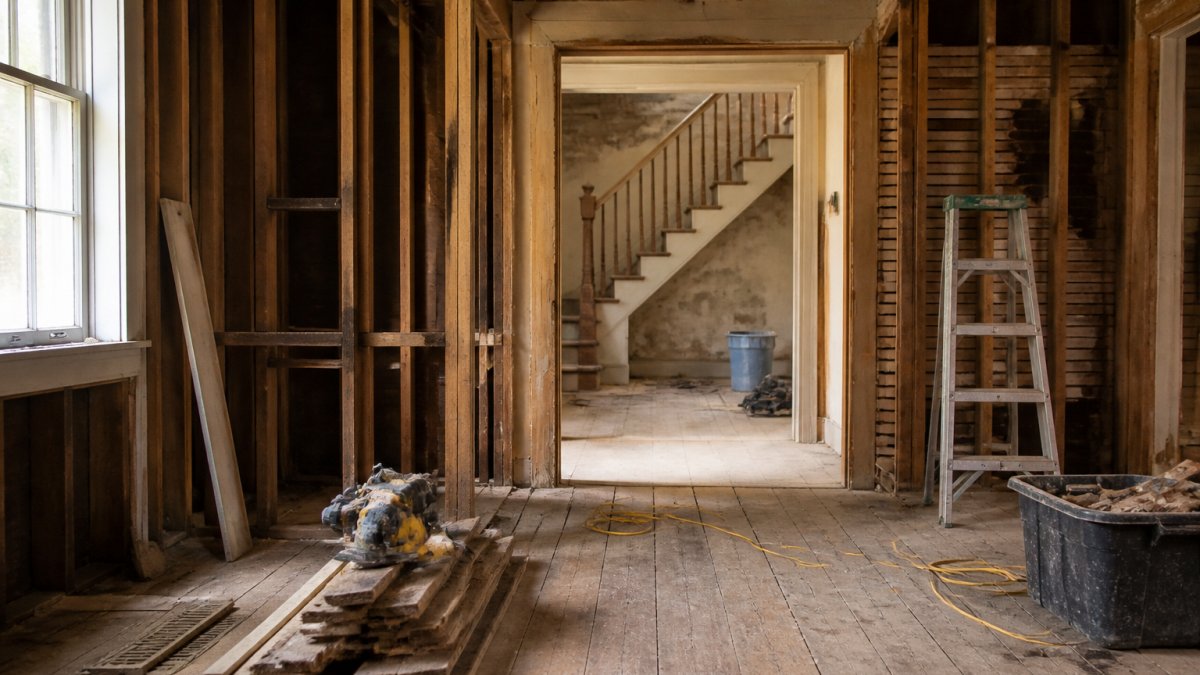
- Hidden conditions, old wiring, water damage, or out-of-code plumbing behind the drywall
- Long-lead delays, cabinet backorders that stall the job and extend temporary-living costs
TerraChic Remodeling's overrun guidance names poor planning, scope creep, and hidden structural issues as the common culprits, and recommends a tracking system to catch drift early. Budgets more often fail in the planning phase, well before construction begins.
Build a Kitchen Remodel Cost Breakdown Before You Sign Anything
A kitchen remodel cost breakdown is a line-item list of every scope item with a realistic dollar range attached, signed off before work begins.
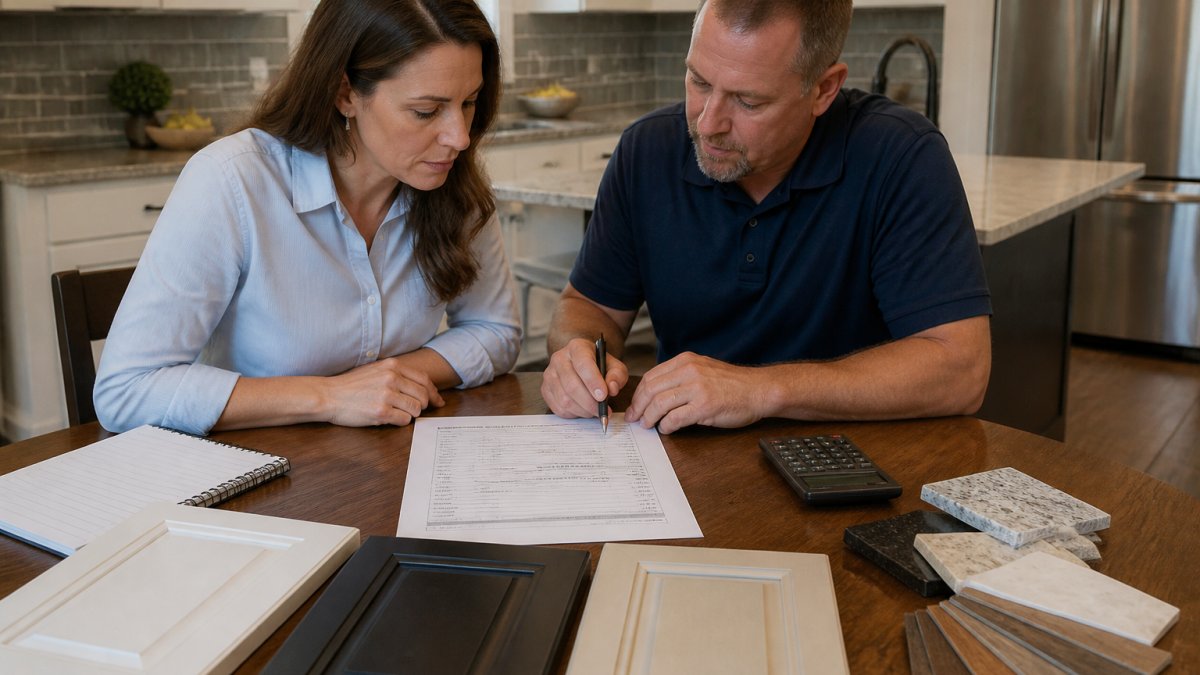
Build it in this order:
- Demolition and haul-away, one line, including dumpster
- Permits and inspections, pull the actual fee from your local building department, never estimate
- Rough plumbing and electrical, separate lines, since these are where hidden damage shows up
- Cabinetry and installation, split the boxes from the labor
- Countertops, backsplash, and flooring, material plus fabrication plus install
- Appliances and fixtures, including panel-ready appliances, which cost more than standard fronts
- Lighting, switches, and outlets, commonly underbudgeted
- Paint, trim, and punch list
- Contingency, its own line, not buried in the others
Watch out: the most common mistake is letting a single "miscellaneous" line absorb 15% of the budget. Break it apart, or it will hide the overrun until final billing.
Step-by-Step: Freeze Your Project Scope and Layout
Freezing scope means writing down exactly what's in and what's out, then requiring a signed change order to alter it. Do this before signing a contract, not after.
The process:
- Write a one-page scope statement listing every room element being replaced
- List "out of scope" items explicitly, like moving the sink or adding a window
- Mark a decision-freeze date for each category: cabinets, countertops, tile, paint
- Sign it alongside your contractor
- Store it where both of you can pull it up during construction
Where Keeping the Existing Layout Saves Real Money
Keeping the existing kitchen layout is the single biggest cost lever available to most homeowners. Moving a sink or range means relocating plumbing supply and drain lines, plus new electrical circuits. Relocating these lines is often a significant share of the cost of a gut renovation.
If your current footprint works, keep it. Cabinets can often be built to fit your existing dimensions, which keeps the plumbing where it is.
Set Your Kitchen Renovation Contingency Fund at the Right Size
A kitchen renovation contingency fund is cash set aside for costs you can't see yet, held separately from the finish budget.
The calculation, in order:
- Add every line from your cost breakdown except contingency. That subtotal is your hard-cost base.
- Multiply the base by your reserve rate (see the bands below).
- Add the reserve as its own line. Your total project budget is base plus reserve.
- Hold the reserve in a separate savings account or escrow, not in the same account you pay draws from.
- Release funds only against a written change order or a documented hidden condition, never against a verbal request.
Pick the rate from home age and how much wall you're opening:
- Cosmetic refresh, same layout, home under 20 years: 10-15%
- Full cabinet and counter replacement, home 20-40 years: 15-20%
- Gut renovation or any wall removal: 20%+
The research is honest about one thing: the percentage is a rule of thumb, not a guarantee. Burkhart Company's remodeling budget guidance and PBH Builders recommend different ranges, and no comparative evidence establishes one universal reserve.
Decide now what happens if the fund goes unused. Most homeowners roll it into a second phase, apply it to the punch list, or return it to savings.
Watch out: the most common mistake is treating the contingency as a slush fund the contractor can draw on without your signature.
Use a Kitchen Remodeling Estimate Checklist to Compare Bids
A kitchen remodeling estimate checklist is a fixed set of questions you ask every bidder so you're comparing the same scope, not three different projects. Run each bid through it line by line.
| Checklist Item | What to Verify | Red Flag |
|---|---|---|
| Scope match | Same items listed on every bid | One bid omits demolition |
| Allowances | Dollar amount stated per material | "Tile allowance TBD" |
| Permits | Who pulls them, cost shown | "Permits by owner" |
| Contingency | Stated percentage | None mentioned |
| Timeline | Start and finish dates | "To be determined" |
| Change orders | Written approval process | Verbal only |
| Insurance | Certificate provided | Refuses to show it |
The allowance line is where bids quietly diverge. A $2,000 tile allowance and a $6,000 tile allowance can look identical on a summary page. How to choose the best kitchen remodeling contractors in Ashburn covers the vetting questions in more depth.
Control Kitchen Remodel Change Orders With a Decision Freeze
Kitchen remodel change orders are written, signed amendments to the contract that state the added cost and the schedule impact before the work happens. No signature, no work.
Set a decision-freeze date per category and hold it:
- Cabinets and hardware locked 8 weeks out
- Countertops and backsplash locked 6 weeks out
- Paint, lighting, and fixtures locked 4 weeks out
After the freeze, any change costs a change-order fee plus the material difference. That's not punishment. It's the mechanism that keeps avoiding budget overruns on kitchen remodels actually possible, because it removes the option to decide twice.
What a Change Order Must Contain
A change order that survives a dispute has six fields. If any field is blank, don't sign it:
- Description of the work added or removed, in plain language
- Reason, owner request, hidden condition, or code requirement
- Cost, labor, material, and any markup shown as separate lines
- Schedule impact, days added or removed, with a new finish date
- Payment terms, when the added amount is due
- Signatures, owner and contractor, dated
A common pattern is to price the change before approval, not after. The contractor writes the number, you approve or reject it, and only then does the work start. If the contractor can't price it until the wall is open, the change order should say so and set a not-to-exceed cap.
Set Approval Thresholds in Advance
Write dollar thresholds into the contract so small changes don't require a full meeting and large ones can't slip through:
- Under $250: field decision by the owner's representative, logged in the daily report, change order issued within 48 hours
- $250 to $2,500: written change order required before work, owner signature
- Over $2,500: written change order plus a revised budget summary and a schedule update
Thresholds are a control, not a formality. They stop the pattern where a dozen small upgrades, an outlet here, a niche there, add up to a five-figure overrun that nobody approved in one place.
Freeze the Decisions, Not Just the Dates
A decision-freeze date only works if the decision is actually made. For each category, record the specific selection, cabinet door style and finish, countertop slab and edge profile, tile SKU and grout color, paint sheen and color code, in a selections sheet attached to the scope statement.
Watch out: the most common failure is a verbal change approved on site and billed at the end.
Track Spending and Hidden-Condition Risk During Construction
Track spending weekly against the line-item breakdown, not monthly. Monthly tracking lets two or three small overruns compound before you notice.
Hidden-condition risk scales with home age and how much you open:
- Homes under 20 years, cosmetic scope: low risk, mostly cosmetic surprises
- Homes 20-40 years, cabinet and counter swap: moderate risk, watch for outdated wiring and shutoff valves
- Homes 40+ years or any wall removal: high risk, expect plumbing, electrical, and framing discoveries
Cabinet backorders are their own risk. Jessen Cabinets' guidance on cabinet delays notes that backorders can stall a project, and the delay cost shows up as extended temporary-living expenses. Kitchen remodeling timeline for Loudoun County homes maps where those stalls typically hit.
Get a Free Estimate Before You Commit
The system above works, but it works best when a contractor helps you build it.
At Reo-ServicePro, we offer an owner-led assessment at no cost. Because we handle plumbing, electrical, and remodeling under one licensed and insured roof, there's no gap between trades where change orders breed.
See our full kitchen remodeling services in Loudoun County, VA, or get a free estimate and we'll follow up with you.
Frequently Asked Questions
How can I avoid going over budget on a kitchen remodel?
Start with a line-item cost breakdown rather than a single lump-sum number, so every dollar has a category: cabinetry, countertops, labor, permits, and a contingency fund. Freeze your scope and layout before work begins, then compare contractor bids line by line to see what each allowance actually covers. A 2026 cost guide puts the national average kitchen remodel at $26,943, with most homeowners spending $14,589 to $41,554, so a realistic starting number matters as much as the discipline that follows.
What amount should I set aside for unforeseen kitchen remodel costs?
Common guidance ranges from 10% to 20% of the project total, with some remodelers recommending at least 15% to 20%. No single percentage is proven universally correct, so treat it as a rule of thumb and size the reserve to your home's age and the work involved. A gut renovation in an older home carries more hidden-condition risk than a cosmetic refresh with the existing layout intact, and your kitchen renovation contingency fund should reflect that difference.
How do I compare contractor estimates for a kitchen remodel?
Ask for a line-item breakdown and check every allowance: the dollar figure attached to cabinets, tile, fixtures, and appliances. A low allowance means you pay the difference at selection time. Verify what the bid includes for permits, demolition, electrical work, plumbing, and cleanup, and confirm the contractor is licensed and insured. Use a kitchen remodeling estimate checklist so each bid answers the same questions, then compare totals on equal scope rather than headline price.
What is the 30% rule in remodeling?
The 30% rule is a planning guideline that says your total project cost should stay within roughly 30% of your home's value, so a remodel does not outprice the neighborhood. It is a sanity check on scope, not a spending target, and it does not replace a real cost breakdown. Pair it with a contingency fund and a change-order process so the final number stays tied to the plan you approved.
The hardest part of avoiding budget overruns on kitchen remodels isn't the math. It's holding the line on scope once the walls are open and every upgrade looks reasonable. Get a free estimate from Reo-ServicePro and start with a line-item breakdown, a frozen scope, and a contingency sized for your home's age.